
Class I, II, III Medical Device Classification – Complete Guide
Medical device classification determines the FDA pathway, registration strategy, listing requirements, labeling limits, quality system expectations, import risk, and whether a device may need 510(k), De Novo, PMA, or exemption analysis before it is marketed in the United States.
Quick Facts
Class I, II, and III Medical Device Classification at a Glance
Introduction
Why Medical Device Classification Comes First
Medical device classification is one of the most important decisions a company must address before selling, importing, labeling, or registering a device in the United States. Classification affects the entire regulatory pathway. It determines whether the device is usually subject to general controls, special controls, premarket notification, De Novo classification, premarket approval, labeling restrictions, quality system requirements, and post-market duties.
A device company should not begin with the question, “How do I get an FDA registration number?” The better question is, “What is the device, what is the intended use, how has FDA classified similar technology, and what pathway is legally required before commercial distribution?” FDA registration can be an important step, but registration alone does not make a device legally marketable.
Incorrect classification can create business consequences far beyond paperwork. A company may manufacture inventory, print packaging, build an Amazon listing, appoint a distributor, or ship goods to the United States before discovering that the product code is wrong, the device requires 510(k), claims exceed an exemption, or the product should have been treated as a higher-risk device.
This guide explains Class I, Class II, and Class III medical device classification in practical terms for manufacturers, importers, foreign establishments, private label brands, specification developers, distributors, Amazon sellers, and companies preparing for FDA medical device registration.
Core Educational Guide
What FDA Means by Medical Device Classification
FDA classifies medical devices based on the level of regulatory control necessary to provide reasonable assurance of safety and effectiveness. The classification is not based only on appearance or product category. FDA considers intended use, indications for use, risk profile, technology, patient contact, duration of use, invasiveness, energy source, software functionality, sterility, clinical setting, and how similar devices have been regulated.
Intended Use Is Central
Intended use describes what the device is meant to do. FDA may evaluate labels, instructions, packaging, websites, brochures, sales presentations, online listings, user manuals, training materials, and other evidence to determine intended use. A simple product can become a regulated medical device if it is marketed for diagnosis, treatment, mitigation, cure, prevention of disease, or structure/function effects.
Risk Determines Control Level
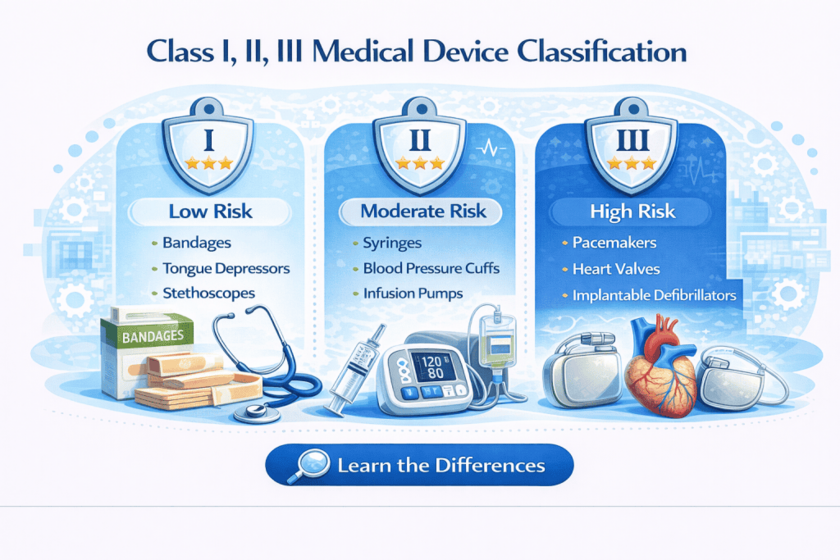
Higher-risk devices generally require greater regulatory controls. A low-risk external device may fall into Class I, while a moderate-risk diagnostic or therapeutic device may be Class II. A life-sustaining, implanted, or high-risk device may fall into Class III and require a more intensive approval pathway.
Class I Medical Devices
Class I medical devices are generally considered lower risk compared with Class II and Class III devices. Many Class I devices are subject to general controls, which may include establishment registration, device listing, labeling requirements, good manufacturing practices, records, reporting, and prohibitions against adulteration and misbranding.
Common Class I Characteristics
Important Class I Warning
Class I does not mean “no FDA requirements.” Many companies make the mistake of assuming an exempt Class I device can be sold without regulatory review. Even when a 510(k) is not required, the company may still need registration, listing, compliant labeling, quality controls, import readiness, and proper establishment role analysis.
Class II Medical Devices
Class II medical devices are generally moderate-risk devices. They are commonly subject to general controls and special controls. Special controls may include performance standards, post-market surveillance, patient registries, special labeling requirements, guidance documents, testing requirements, or other controls FDA considers necessary for safety and effectiveness.
Common Class II Characteristics
510(k) Considerations
A 510(k) submission generally demonstrates that a device is substantially equivalent to a legally marketed predicate device. If required, a company should not market the device until clearance is obtained. Registration and listing are not substitutes for 510(k) clearance when clearance is required.
Class III Medical Devices
Class III medical devices generally present the highest level of risk and often require premarket approval. These devices may support or sustain human life, be implanted, present potential unreasonable risk of illness or injury, or lack sufficient information to determine that general and special controls are adequate.
Common Class III Characteristics
PMA Considerations
Premarket approval is a more demanding pathway than 510(k). A PMA generally requires valid scientific evidence to support safety and effectiveness. Companies dealing with potential Class III devices should complete classification and pathway analysis before promising timelines, accepting purchase orders, or shipping products into the United States.
Comparison Table: Class I vs Class II vs Class III Medical Devices
| Classification Area | Class I | Class II | Class III |
|---|---|---|---|
| General Risk Level | Generally lower risk. | Generally moderate risk. | Generally highest risk. |
| Typical Controls | General controls. | General controls plus special controls. | General controls plus PMA-level review where applicable. |
| Premarket Pathway | Often 510(k)-exempt, but not always. | Often 510(k), unless exempt or another pathway applies. | Often PMA, although classification history must be reviewed. |
| Examples of Risk Factors | Limited patient risk, simple design, external use in many cases. | Greater clinical use, diagnostic or therapeutic impact, special controls needed. | Implanted, life-supporting, life-sustaining, or significant risk profile. |
| Registration and Listing | May still apply depending on establishment activity. | Usually relevant for manufacturers, importers, and other regulated establishments. | Generally relevant and must align with approved or authorized pathway. |
| Common Business Mistake | Assuming exempt means no FDA obligations. | Assuming registration replaces 510(k) clearance. | Underestimating PMA evidence, timing, cost, and documentation requirements. |
How to Find the Correct FDA Product Code
The FDA product code is a key classification identifier. It helps connect a device to its classification regulation, device class, submission type, and applicable controls. Selecting the wrong product code can create problems with device listing, customs entry, FDA import screening, buyer review, and premarket strategy.
Key Compliance Section
Legal Authority and Official FDA Sources
Medical device classification is based on the Federal Food, Drug, and Cosmetic Act and FDA regulations. FDA uses device classification to determine the level of regulatory control needed to provide reasonable assurance of safety and effectiveness. The classification rules are connected to product codes, regulation numbers, general controls, special controls, and premarket pathways.
FDA medical device classification regulations are found in 21 CFR Subchapter H. Establishment registration and device listing requirements are addressed in 21 CFR Part 807. Quality system requirements are addressed in 21 CFR Part 820. FDA also provides official resources for classifying medical devices, premarket submissions, and device registration and listing.
A device can become misbranded or adulterated when required labeling, clearance, approval, quality, registration, listing, or other legal requirements are not met. FDA may use enforcement tools that affect imports, distribution, labeling, marketplace access, inspections, and continued commercial activity.
Real-World Risks of Wrong Device Classification
Common Classification Mistakes
Companies often fail classification review because they focus on selling the product before confirming the FDA pathway. A device classification review should happen before labels are printed, before import documents are prepared, before Amazon listings go live, and before distributors request regulatory documents.
Documentation Mistakes
Strategy Mistakes
When Should a Company Review Device Classification?
Medical device classification should be reviewed as early as possible. The best time is before product development is finalized, before labeling claims are written, before product codes are selected, before FDA registration is filed, and before a shipment is booked. Early classification review helps prevent expensive corrections and avoidable market delays.
Class I, II, and III Medical Device Classification Support
FDA Registration Assistance is a U.S.-based FDA compliance consulting firm located in Miami, Florida. We help medical device companies review FDA classification questions, product codes, registration requirements, device listings, U.S. Agent obligations, importer coordination, and compliance risks before entering the U.S. market.
Our team has assisted more than 1,000 companies in over 135 countries with FDA registration and regulatory compliance matters. With 15+ years of combined experience, we support manufacturers, foreign exporters, importers, distributors, specification developers, and private label device companies preparing to sell or import medical devices in the United States.
Contact FDA Registration Assistance at info@fdaregistrationassistance.com or visit https://www.fdaregistrationassistance.com/.
Frequently Asked Questions
Class I, II, III Medical Device Classification FAQs
These FAQs answer common questions about FDA medical device classification, product codes, exemptions, 510(k), PMA, registration, labeling, imports, and U.S. market entry.
1. What are Class I, Class II, and Class III medical devices?
Class I, Class II, and Class III are FDA medical device classifications based on the level of regulatory control needed to provide reasonable assurance of safety and effectiveness. Class I devices are generally lower risk, Class II devices are generally moderate risk, and Class III devices are generally higher risk. The class affects whether the device may need general controls, special controls, 510(k) clearance, De Novo authorization, PMA approval, registration, listing, and other compliance steps.
2. How does FDA decide the class of a medical device?
FDA evaluates the intended use, indications for use, risk level, technology, patient contact, clinical setting, and similarity to legally marketed devices. FDA also considers whether general controls are sufficient or whether special controls or premarket approval are needed. Classification should be based on FDA regulations and product code analysis, not assumptions or marketing preferences.
3. Is a Class I device automatically exempt from FDA requirements?
No. Some Class I devices may be exempt from 510(k), but that does not mean they are exempt from all FDA requirements. Registration, listing, labeling, quality system provisions, complaint handling, reporting, and import requirements may still apply depending on the device and establishment activity. A company should verify the exact exemption and remaining obligations before selling or importing.
4. Do most Class II devices require 510(k) clearance?
Many Class II devices require 510(k) clearance before marketing, unless a specific exemption applies or another pathway is appropriate. A 510(k) generally demonstrates substantial equivalence to a legally marketed predicate device. A company should not assume that Class II registration and listing are enough. The product code, regulation number, and exemption status must be confirmed.
5. Do Class III devices require PMA approval?
Many Class III devices require premarket approval, commonly called PMA. PMA is generally required for high-risk devices where general and special controls are not sufficient to provide reasonable assurance of safety and effectiveness. A PMA can require significant scientific evidence, manufacturing information, clinical data, and quality system readiness. Classification should be reviewed early for any device that may fall into Class III.
6. What is the difference between product code and device class?
A product code is a specific FDA identifier used to classify and track a type of medical device. The device class is the risk-based category associated with the device and regulatory controls. Product code analysis often helps identify the regulation number, class, submission type, and applicable requirements. Using the wrong product code can create problems with listing, import, and compliance strategy.
7. Can two similar-looking devices have different classifications?
Yes. Two devices that look similar can have different classifications if they have different intended uses, indications, technology, patient populations, risks, energy sources, software functions, or clinical settings. FDA classification is not based only on appearance. Claims and functionality can significantly change the pathway.
8. Can marketing claims change the device classification?
Yes. Marketing claims can affect how FDA views intended use. Disease claims, diagnostic claims, treatment claims, clinical performance claims, or claims involving prevention or mitigation can move a product into a different regulatory pathway. Website language, Amazon listings, packaging, brochures, social media content, and instructions should be reviewed before launch.
9. Does FDA registration prove the device classification is correct?
No. FDA establishment registration does not prove that the device classification is correct, and it does not mean FDA has cleared or approved the product. Registration is an establishment requirement. A company must separately confirm the device class, product code, premarket pathway, labeling compliance, and other requirements that apply to the specific device.
10. What is the difference between 510(k), De Novo, and PMA?
A 510(k) is commonly used when a device can be shown to be substantially equivalent to a legally marketed predicate device. De Novo may be used for certain novel devices that are low to moderate risk but do not have a suitable predicate. PMA is generally used for higher-risk Class III devices and requires more extensive evidence to support safety and effectiveness. The correct pathway depends on classification and regulatory history.
11. How do I know if my Class I device is 510(k)-exempt?
You must review the specific FDA classification regulation, product code, exemption limitations, and intended use. Some Class I devices are exempt from 510(k), but exemptions may not apply if the device has certain features, claims, or technological characteristics. A device can also lose the practical benefit of an exemption if the labeling or intended use exceeds the exempt category.
12. How do I know if my Class II device is 510(k)-exempt?
Some Class II devices are exempt from 510(k), but many are not. The company must review the FDA product code, classification regulation, limitations of exemptions, and intended use. If a device has a new intended use or different technological characteristics that raise new questions of safety or effectiveness, additional review may be needed even if similar devices appear exempt.
13. What happens if I use the wrong FDA product code?
Using the wrong product code can create listing errors, import delays, FDA questions, marketplace problems, and buyer concerns. It can also cause a company to misunderstand whether 510(k), De Novo, PMA, or exemption analysis is required. Product code selection should be based on intended use, technology, classification regulation, and FDA precedent.
14. Can an Amazon medical device seller rely on the manufacturer’s classification?
An Amazon seller may rely on manufacturer documentation in some situations, but the seller should still understand the device’s classification, claims, labeling, and import role. If the seller is a private label brand, specification developer, initial importer, or entity making independent medical claims, additional obligations may apply. Amazon may ask for evidence that the device is lawfully marketed.
15. Do private label medical devices need classification review?
Yes. Private label devices should be reviewed carefully because the brand owner’s role may affect registration, listing, labeling, claims, importer obligations, and customer-facing documentation. If the private label brand controls the specifications, labeling, intended use, or U.S. distribution strategy, it may have responsibilities that go beyond simple resale.
16. Does a foreign manufacturer need classification review before shipping to the U.S.?
Yes. A foreign manufacturer should review classification before shipping medical devices to the United States. FDA import review may consider product code, manufacturer registration, device listing, intended use, labeling, and premarket status. If the classification is wrong or incomplete, the shipment may face delays, detention, or refusal risk.
17. Can a device be both FDA registered and still illegal to sell?
Yes. A company can have an FDA registration number while the device itself is not lawfully marketed. This can happen when the device requires 510(k) clearance, De Novo authorization, PMA approval, compliant labeling, or other requirements that have not been satisfied. Registration is not a shortcut around the correct marketing pathway.
18. What role does intended use play in device classification?
Intended use is central to classification because it explains what the product is meant to do. FDA may evaluate claims across labels, websites, product pages, instructions, advertising, and sales materials. A product marketed for general wellness may be treated differently from a product marketed to diagnose, treat, cure, mitigate, or prevent disease.
19. What role do indications for use play in classification?
Indications for use describe the disease, condition, population, or clinical purpose for which a device is intended. Changes in indications can affect the device pathway. A device intended for a general measurement may have a different risk profile from a device intended to diagnose a serious condition or guide treatment decisions.
20. Can software be a Class I, II, or III medical device?
Yes. Software may be regulated as a medical device depending on its intended use and function. Software that analyzes medical data, supports diagnosis, recommends treatment, monitors patients, or controls another device may require classification review. The class depends on risk, clinical impact, functionality, and applicable FDA policy.
21. Are diagnostic devices usually Class II or Class III?
Diagnostic devices can fall into different classes depending on what they detect, how results are used, patient risk, and whether incorrect results could cause serious harm. Some diagnostic devices may be Class I or Class II, while others may require more significant review. Classification should be based on the specific analyte, technology, intended use, and clinical context.
22. What should be reviewed before choosing a medical device class?
Before choosing a device class, a company should review the product description, intended use, indications, technology, materials, patient contact, duration of use, sterility, software functions, energy source, target population, labeling, comparator devices, product codes, regulation numbers, and FDA databases. A careful review reduces the risk of choosing the wrong pathway.
23. Can FDA change how a device is classified?
FDA classification can evolve through regulations, reclassification orders, guidance, De Novo decisions, and new safety information. A company should verify the current classification instead of relying on old documents or outdated assumptions. This is especially important when importing devices, acquiring a product line, or updating claims.
24. When should classification be reviewed for a new medical device?
Classification should be reviewed before finalizing claims, designing labeling, printing packaging, filing registration, listing the device, booking shipments, launching e-commerce pages, or signing distributor agreements. Early classification review helps avoid costly corrections and helps the company understand whether premarket review is required before marketing.
25. How can FDA Registration Assistance help with medical device classification?
FDA Registration Assistance can help review the device’s intended use, product code, likely classification, registration needs, device listing issues, U.S. Agent requirements, importer considerations, and compliance risks. Our team supports manufacturers, importers, foreign establishments, distributors, and private label companies that need practical guidance before entering or continuing in the U.S. medical device market.