
FDA Consulting Services in Khartoum, Sudan
FDA Registration Assistance provides professional FDA consulting services for companies in Khartoum, Sudan that manufacture, process, export, label, or market FDA-regulated products in the United States. We help food, dietary supplement, cosmetic, pharmaceutical, and medical device exporters understand FDA requirements before registration, listing, importation, labeling, or U.S. market launch. From Sudan's manufacturing capital, that work spans groundnut and grain exporters, hibiscus and botanical suppliers, and consumer goods producers moving product toward U.S. buyers.
FDA Compliance Support for Sudanese Exporters
FDA Consulting for Khartoum Companies Entering or Expanding in the U.S. Market
Local Market
Khartoum is Sudan's primary administrative, commercial, and manufacturing center, supporting food processors, agricultural exporters, peanut, sorghum, and hibiscus suppliers, beverage producers, dietary supplement companies, cosmetic and personal care brands, pharmaceutical distributors, medical device suppliers, and international trading companies, spanning foods, supplements, cosmetics and personal care, pharmaceuticals, medical devices, and consumer goods that may need FDA compliance before reaching the United States.
FDA-Regulated Products
FDA requirements may apply to foods, dietary supplements, cosmetics, OTC and prescription drugs, and medical devices depending on intended use, labeling, ingredients, claims, manufacturing, and how products are exported and imported.
Foreign-Facility Support
FDA Registration Assistance is based in Miami, Florida and supports Khartoum, Sudan exporters remotely with foreign facility registration, U.S. Agent, FSVP, labeling, drug and device listing, and import compliance services, with particular depth in the groundnut, grain, and botanical categories that dominate Khartoum's U.S.-bound trade.
Khartoum Exporters Need Clear FDA Guidance Before Products Reach the U.S. Market
A Khartoum company may need FDA consulting before exporting groundnuts, sorghum, hibiscus, or another agricultural line, placing a food or botanical supplement into U.S. e-commerce channels, registering a pharmaceutical or medical device establishment, updating a cosmetic compliance file under MoCRA, or responding to an import issue at a U.S. port. FDA requirements can apply long before a product reaches a shelf, warehouse, online marketplace, importer, or port of entry.
FDA compliance is not limited to one form or one registration. The correct path depends on the product category, intended use, product claims, manufacturing location, the importer's role, facility obligations, label content, and the fact that a Khartoum exporter is a foreign facility selling into the United States. A food company may need foreign food facility registration, a U.S. Agent, and FSVP coordination. A drug manufacturer may need establishment registration, listing, an NDC labeler code, and a Drug Master File. A device firm may need establishment registration, device listing, classification review, and annual renewal planning.
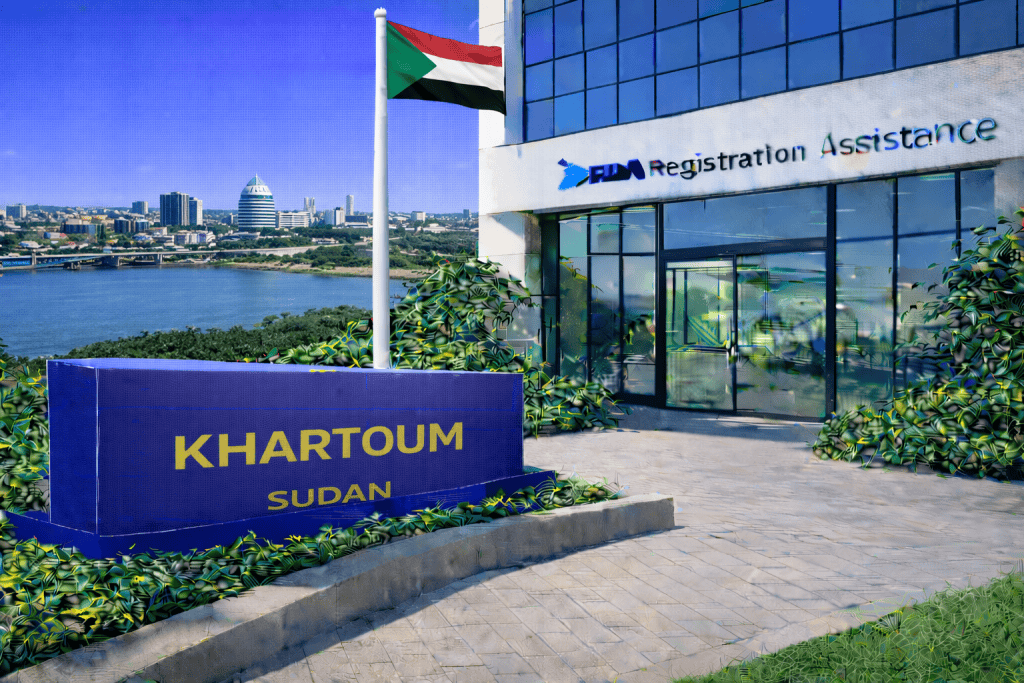
FDA Compliance Services Available for Khartoum, Sudan Companies
Foreign Food Facility Registration
Facilities that manufacture, process, pack, or hold food or supplements for consumption in the United States may need foreign food facility registration. Khartoum food and nutraceutical brands should confirm requirements before exporting.
U.S. Agent Service
Foreign FDA-regulated facilities must appoint a U.S. Agent as part of FDA registration. FDA Registration Assistance can serve as the U.S. Agent for eligible Khartoum food, drug, medical device, and other regulated establishments that require a U.S.-based regulatory contact.
FSVP Compliance Support
U.S. importers buying from Khartoum suppliers may need a Foreign Supplier Verification Program when importing FDA-regulated food. FSVP requires supplier evaluation, hazard analysis review, verification activities, records, and inspection readiness.
FDA Label Review
Labels should be reviewed before printing, importing, or selling. We help evaluate required statements, Nutrition Facts, Supplement Facts, ingredient declarations, allergen statements, claims, warnings, directions, and responsible firm information for the U.S. market.
Drug & Pharmaceutical Registration
Drug establishment registration and listing, NDC labeler codes, and Drug Master File support for Khartoum pharmaceutical and active-ingredient manufacturers exporting to the United States, with a U.S. Agent.
Medical Device & Cosmetic Compliance
Medical device registration and listing with classification review, plus MoCRA cosmetic facility registration, product listing, and the Responsible Person role.
Which FDA Consulting Service May Apply to Your Khartoum Business?
| Product or Business Type | Common FDA Need | Why It Matters | How FDA Registration Assistance Helps |
|---|---|---|---|
| Food & Beverage Exporters | Foreign food facility registration, U.S. Agent, FSVP, label review | Missing or incorrect compliance can lead to import holds, delays, or distribution issues. | We assist with registration, importer coordination, labels, and documentation. |
| Supplement & Nutraceutical Brands | Part 111 facility compliance, Supplement Facts and claims review | Supplement labels and claims are frequently reviewed by platforms, retailers, and regulators. | We review labels, claims, warnings, ingredients, and required label elements. |
| Pharmaceutical & API Manufacturers | Drug establishment registration, listing, NDC, Drug Master File, U.S. Agent | Foreign drug makers must register, list, and support ingredients to reach the U.S. market. | We support registration, listing, NDC, DMF coordination, and U.S. Agent service. |
| Medical Device Companies | Classification, establishment registration, device listing, U.S. Agent | Wrong classification or listing can create serious market-access and import problems. | We support registration, listing, classification review, and renewal planning. |
| Cosmetic Brands | MoCRA facility registration, product listing, Responsible Person, labeling | Cosmetic companies must meet modern FDA cosmetic compliance expectations. | We assist with MoCRA strategy, label review, and registration-related support. |
| Groundnut & Grain Exporters | Foreign food facility registration, FSVP, aflatoxin testing records, Prior Notice | Lots above FDA's aflatoxin action level are refused, so drying, storage, and testing records decide entry. | We prepare registration, labeling, and the certificates importers use for verification. |
Why Khartoum Companies Work With FDA Registration Assistance
FDA Registration Assistance is a specialized FDA compliance consulting firm that helps companies worldwide prepare, file, review, and maintain FDA compliance documents. We understand the requirements faced by African exporters entering the U.S. market and focus on practical execution, clear communication, and helping clients avoid preventable compliance problems.
Important FDA Compliance Issues for Khartoum and Sudan Exporters
Khartoum companies often operate in product categories — peanuts and groundnuts, sorghum and grains, hibiscus and botanical products, agricultural exports, supplements and nutraceuticals, cosmetics, pharmaceuticals, and food and beverage — where claims, registrations, supplier records, and product listings overlap. These models can create FDA exposure if labels, claims, registrations, or supplier documentation are not reviewed early.
Import Readiness
FDA-regulated imports may be reviewed at entry. Khartoum exporters should confirm facility registration, product coding, labeling, FSVP responsibilities, and Prior Notice before commercial shipments arrive at a U.S. port.
Label and Claim Control
A label can change the regulatory category of a product. Structure-function claims, disease claims, treatment claims, cosmetic claims, and device claims must be reviewed carefully before they appear on U.S. packaging.
Groundnut and Botanical Exports
Khartoum's agricultural exports face contaminant scrutiny first. Groundnut and grain lots are judged against FDA's 20 parts per billion aflatoxin action level, while hibiscus and other botanicals are sampled for pesticides and filth, so lot testing and supplier records matter as much as the registration itself.
Renewal Planning
Foreign food and cosmetic facility registrations renew biennially, while drug and device establishment registrations renew annually. Missed renewal windows can create listing issues or shipment delays.
Official FDA Resources Relevant to Khartoum Exporters
Companies should rely on official FDA sources when evaluating requirements. FDA Registration Assistance uses official FDA rules, databases, and compliance references — including the Foreign Supplier Verification Program under 21 CFR Part 1, Subpart L — when helping clients assess product obligations.
FDA Importing and U.S. Agent Information
FDA provides public information on importing FDA-regulated products, foreign facility registration, and U.S. Agent requirements, including entry status inquiries, examinations, sample collections, detentions, and refusals.
FDA Product Category Resources
FDA maintains official information for regulated product areas including foods, drugs, medical devices, and cosmetics. These sources help confirm compliance expectations before products are marketed in the U.S.
How Our Khartoum FDA Consulting Process Works
1. Product and Business Review
We review your product category, company role, manufacturing location, export activity, labeling, claims, and commercial goals to understand which FDA requirements may apply to your Khartoum business.
2. Compliance Pathway Identification
We identify the likely compliance pathway, including foreign facility registration, drug or device listing, U.S. Agent, FSVP, label review, classification, or import documentation needs.
3. Document Collection and Filing Support
We request the required details, prepare the applicable filings or reviews, and help reduce avoidable errors that can delay compliance completion for your exports.
4. Ongoing Compliance Guidance
We help clients maintain registration records, update labels or listings, prepare for biennial or annual renewals, respond to compliance questions, and support future product expansion.
Real-World FDA Risks Khartoum Exporters Should Avoid
Need FDA Consulting Services in Khartoum, Sudan?
FDA Registration Assistance helps Khartoum businesses with foreign facility registration, U.S. Agent service, FSVP compliance, label review, drug and medical device listing, cosmetic (MoCRA) compliance, and import-related FDA consulting.
FDA Registration Assistance is located in Miami, Florida, USA and assists clients nationwide and internationally. We have helped 1,000+ companies across 135+ countries with 15+ years of combined regulatory experience. Contact us at info@fdaregistrationassistance.com.
Frequently Asked Questions About FDA Consulting Services in Khartoum, Sudan
1. Do companies in Khartoum need FDA consulting before selling regulated products in the U.S.?
Many Khartoum businesses benefit from FDA consulting before exporting food, dietary supplements, cosmetics, pharmaceuticals, or medical devices, because FDA requirements depend on the product category, labeling, claims, manufacturing, and the company's role as a foreign exporter to the United States.
2. Does FDA Registration Assistance serve companies in Khartoum, Sudan?
Yes. FDA Registration Assistance serves Khartoum, Sudan businesses remotely and provides foreign facility registration, U.S. Agent service, FSVP support, labeling, drug and device listing, cosmetic, and import compliance consulting for companies selling into the United States.
3. Is FDA Registration Assistance located in Khartoum?
No. FDA Registration Assistance is a U.S.-based firm in Miami, Florida, and serves clients across the United States and internationally, including companies in Khartoum, Sudan. For registered foreign facilities, we can also act as the required U.S. Agent.
4. What FDA services are most common for Khartoum food and supplement exporters?
Common services include foreign food facility registration, U.S. Agent service, FDA label review, FSVP coordination with the U.S. importer, Prior Notice for food shipments, and Supplement Facts and ingredient review for dietary supplements and nutraceuticals. For Khartoum exporters, groundnuts, grains, and botanical products account for much of this work.
5. Do Khartoum exporters need a U.S. Agent?
Most do. Any foreign facility that registers with the FDA must appoint a U.S. Agent located in the United States to serve as the FDA's point of contact for communications and inspections. FDA Registration Assistance can act as your U.S. Agent.
6. Can FDA Registration Assistance help with Foreign Food Facility Registration?
Yes. FDA Registration Assistance helps eligible foreign food facilities in Khartoum complete foreign food facility registration, obtain a DUNS Number, appoint a U.S. Agent, and maintain the registration, which renews biennially for food facilities.
7. Can you act as U.S. Agent for a Sudanese company shipping products to the U.S.?
Yes. FDA Registration Assistance can serve as U.S. Agent for eligible foreign FDA-regulated facilities, including food, drug, medical device, and other establishments in Khartoum that need a U.S.-based regulatory contact for FDA registration purposes.
8. Do Khartoum pharmaceutical manufacturers need FDA registration?
Foreign drug manufacturers typically need FDA drug establishment registration and drug listing, an NDC labeler code, and a U.S. Agent, and may support active ingredients with a Drug Master File. We map the pathway for Khartoum pharmaceutical and API exporters.
9. Do Khartoum medical device companies need FDA establishment registration?
Some do. Foreign medical device establishments may need establishment registration and device listing depending on their role, the device type, classification, and commercial activity in the U.S. Classification should be reviewed before listing a device. Khartoum distributors that handle devices should confirm their role before listing.
10. Can you help determine medical device classification?
Yes. FDA Registration Assistance can help review intended use, product claims, technology, likely product codes, classification, listing considerations, and whether additional regulatory steps may be needed before a Khartoum device company markets in the United States.
11. Does the FDA approve food products before sale?
Generally no. The FDA does not approve most food products before sale, but a Khartoum food or supplement exporter may still need facility registration, compliant labeling, food safety controls, ingredient compliance, Prior Notice, and FSVP coordination where applicable.
12. Can a label review prevent FDA problems?
Yes. A label review can identify issues before printing or selling, including missing required statements, incorrect Nutrition Facts or Supplement Facts formatting, improper claims, allergen declarations, warning language, and responsible firm information for the U.S. market.
13. Do supplement and nutraceutical companies in Khartoum need FDA registration?
Dietary supplement manufacturers, processors, packers, or holders may need foreign food facility registration, since supplements are regulated as foods under 21 CFR Part 111. Khartoum supplement and nutraceutical brands should also review labels, claims, and ingredients before exporting.
14. Do cosmetic businesses in Khartoum need FDA compliance support?
Yes. Cosmetic businesses should understand modern FDA cosmetic requirements under MoCRA, including facility registration, product listing, the Responsible Person role, labeling, claims, and safety substantiation before selling into the United States.
15. What happens if a shipment arrives with FDA issues?
The FDA may request documents, examine the shipment, collect samples, detain the product, or refuse entry depending on the issue. Khartoum exporters and their importers should address registration, labeling, product coding, and supplier verification before the shipment arrives.
16. Can you help with FDA import holds or detention?
Yes. FDA Registration Assistance can help review import hold issues, evaluate likely causes, organize documentation, support a communication strategy, and help prepare a stronger compliance position for current and future shipments from Khartoum.
17. Should Khartoum companies review FDA requirements before selling on Amazon or U.S. retail?
Yes. U.S. online marketplaces and retailers may request FDA documentation, compliant labels, certificates, registration evidence, or product-specific compliance information before allowing listings or distribution of imported products.
18. Who is responsible for FSVP when a U.S. importer buys from a Khartoum supplier?
For food, the Foreign Supplier Verification Program is the U.S. importer's responsibility. The importer verifies that the Khartoum supplier produces food in compliance with applicable U.S. safety standards. We support your registration and the importer's FSVP work.
19. What documents are needed to start FDA consulting?
Useful documents include product labels, ingredient lists, product specifications, claims, website links, facility information, manufacturing location, importer details, and any prior FDA registration or listing records for your Khartoum business.
20. Can you review product claims?
Yes. FDA Registration Assistance can review product claims to help identify potential food, supplement, cosmetic, drug, or device positioning risks before the claims appear on labels, websites, advertisements, or U.S. retail listings.
21. Can FDA Registration Assistance help with registration renewals?
Yes. We help clients manage applicable FDA renewals. Foreign food and cosmetic facility registrations renew biennially, while drug and device establishment registrations renew annually, and we maintain each registration through its renewal cycle.
22. What is the difference between FDA registration and FDA approval?
FDA registration is an administrative compliance step for certain establishments or products. FDA approval, clearance, or authorization is separate and depends on the product type and pathway. Describing registration as FDA approval is a violation a Khartoum exporter should avoid.
23. What aflatoxin limits apply to Khartoum peanut and grain exports?
Strict ones. FDA applies an action level of 20 parts per billion total aflatoxins to peanuts, peanut products, and most other human foods, and shipments testing above it can be refused or placed under detention without physical examination. Khartoum exporters of groundnuts, sorghum, and similar crops should build drying, storage, and lot-testing controls into their food safety plan and keep certificates of analysis their U.S. importer can use for FSVP verification. We help set up that documentation before the first shipment.
24. How do I get started with FDA consulting for my Khartoum business?
You can start by contacting FDA Registration Assistance with your product category, company role, label, manufacturing location, export plans, and questions. We review the situation and identify the next FDA compliance steps for your Khartoum business.
25. Why should I choose FDA Registration Assistance?
FDA Registration Assistance has helped 1,000+ companies across 135+ countries with 15+ years of combined regulatory experience. We provide practical FDA compliance support for registration, labeling, U.S. Agent, FSVP, drug, medical device, cosmetic, and import needs.