
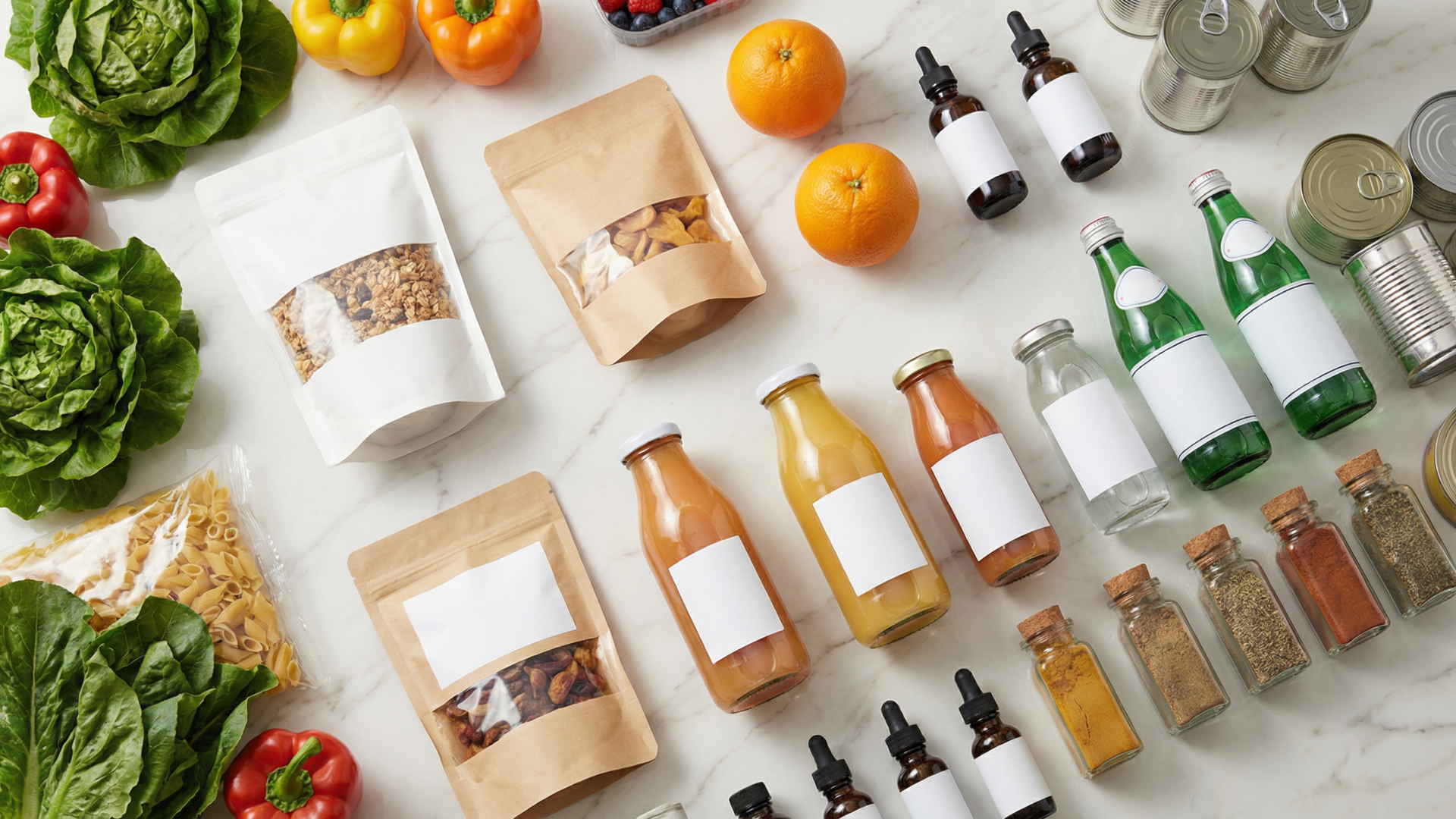
FDA Food & Beverage Compliance
FDA Food Facility Registration & Compliance Services
FDA Food Facility Registration generally applies to domestic and foreign facilities that manufacture, process, pack, or hold food for human or animal consumption in the United States, unless an exemption applies. Foreign facilities that are required to register must designate a U.S. Agent. Registration is governed by 21 CFR Part 1, Subpart H and is renewed during October 1–December 31 of each even-numbered year.
- Who Must Register
- Covered domestic and foreign facilities that manufacture, process, pack, or hold food for U.S. consumption, unless an exemption applies.
- Governing Regulation
- FD&C Act § 415 and 21 CFR Part 1, Subpart H (including 21 CFR 1.225–1.245).
- Filing System
- FDA Industry Systems / FURLS Food Facility Registration Module (FFRM).
- Foreign Facility Requirement
- A foreign facility that is required to register must designate a U.S. Agent located in the United States.
- Registration Record
- FDA assigns a Food Facility Registration number. FDA advises facilities to protect registration credentials and not share FIS/FURLS passwords.
- Renewal Cycle
- Biennial — October 1 through December 31 of each even-numbered year; 2026 is a renewal year.
- Unique Facility Identifier
- A UFI recognized by FDA is required; FDA currently recognizes DUNS as an acceptable UFI.
- Professional Service
- $858/year for Foreign Food Facility Registration + U.S. Agent service. FDA charges no government registration fee.
Expert FDA food registration, FSVP compliance, U.S. Agent services, and import alert resolution — for domestic and foreign food businesses selling in the U.S. market.
Our Services
Complete FDA Food & Beverage Compliance Services
Navigating FDA food regulations can be complex, time-consuming, and costly if done incorrectly. Whether you are a domestic manufacturer, Amazon seller, or international importer, compliance with the U.S. Food and Drug Administration is mandatory before selling food products in the United States. FDA Registration Assistance provides end-to-end FDA food compliance services designed to help businesses register correctly, pass FDA inspections, and remain fully compliant year after year.
Foreign Food Facility Registration
Register a covered foreign food facility and coordinate the required U.S. Agent designation before exporting FDA-regulated food to the United States.
Get started →Domestic Food Facility Registration
Prepare a domestic food facility registration when the U.S. location manufactures, processes, packs, or holds food and no exemption applies.
Get started →U.S. Agent Services
Ongoing U.S. Agent representation for foreign food facilities that are required to register, including routine and emergency FDA communications.
Get started →FSVP Compliance
FSVP program development and management for covered food importers, including hazard analysis, supplier evaluation, verification activities, corrective actions, and records.
Get started →Biennial Registration Renewal
Food facility registration is renewed every two years, not annually. We manage the October–December biennial renewal when due.
Get started →Shipment Compliance Consulting
Import-compliance consulting and shipment support to identify registration, Prior Notice, FSVP, labeling, and entry issues before they become larger problems.
Get started →HACCP Plan Development
HACCP support for seafood and juice operations, plus preventive-controls and food-safety-plan support for other facilities when applicable.
Get started →Label & Ingredient Review
Review Nutrition Facts, ingredient declarations, allergen statements, claims, net quantity, and other food-label elements for FDA compliance risks.
Get started →Import Alert Assistance
Review FDA Import Alert and DWPE issues and help prepare corrective-action, testing, documentation, or removal-request strategies when applicable.
Get started →DUNS Request Assistance
Help obtain or verify the facility DUNS number used as an FDA-recognized Unique Facility Identifier for food facility registration.
Get started →FSVP for Amazon Sellers
FSVP compliance support for Amazon sellers and other e-commerce food importers whose U.S. business is the FSVP importer or otherwise has importer responsibilities under the rule.
Get started →Food Canning Establishment (FCE-SID)
FCE registration and scheduled-process filing support for processors of covered low-acid canned foods and acidified foods in hermetically sealed containers.
Get started →Prior Notice Filing
Prepare and file FDA Prior Notice for imported food before arrival, using the shipment-specific timing and information required by 21 CFR Part 1, Subpart I.
Get started →Do You Need Registration?
Who Is Required to Register with the FDA?
Registration applies to covered facilities based on what happens at the physical location. Farms, retail food establishments, restaurants, private residences, and other operations may be exempt when the regulatory definitions are met.
Why FDA Registration Assistance
The Trusted Choice for FDA Food Compliance
⚡ Fast Registration Support
Routine food facility registrations are typically prepared within 24–48 hours after complete information and a valid UFI are available. Other compliance services vary by scope.
✅ Expert-Reviewed Filings
We review facility role, UFI information, product categories, U.S. Agent details, and filing data before submission to reduce avoidable errors.
🌍 Global Food Compliance Support
We support domestic and international food manufacturers, processors, importers, and brand owners with U.S. FDA compliance projects.
🔒 No FDA Registration Fee
FDA does not charge a government fee for initial food facility registration, updates, biennial renewal, or cancellation. Professional service fees are separate.
📅 Biennial Renewal Tracking
We track the October–December renewal window in even-numbered years and manage renewal when it is included in the service scope.
📞 Regulatory Support
Our team supports FDA correspondence, registration questions, inspection-related communications, import issues, and separately scoped compliance matters.
🏆 Serving Clients Since 2013
FDA Registration Assistance has supported regulated businesses since 2013 across food registration, U.S. Agent, FSVP, labeling, and import compliance.
🚀 Coordinated Compliance Services
Registration can be coordinated with FSVP, Prior Notice, labeling, HACCP or preventive controls, FCE/SID, and import-compliance services as needed.
Compliance Coverage
FDA Food Regulations We Handle
FDA regulates most human and animal foods in U.S. interstate commerce, while USDA primarily regulates meat, poultry, and certain processed egg products. The requirements that apply depend on the food, facility, process, and import role.
Simple Process
How FDA Food Registration Works
Our food facility registration process follows the four steps below.
Provide the physical facility address, owner/operator details, UFI/DUNS information, food categories, and U.S. Agent information when applicable.
We confirm whether the location appears subject to registration, review required data, check for common UFI/address issues, and prepare the filing.
We submit the registration through FDA's Food Facility Registration Module when authorized. Timing depends on complete information, UFI status, and any required U.S. Agent verification.
We provide the filing confirmation and registration records, then support updates, U.S. Agent communications, and biennial renewal when included in your service.
Legal Authority
Statutory & Regulatory Basis for Foreign Food Facility Registration
Foreign Food Facility Registration is grounded in U.S. federal statute and FDA regulation. Below are the governing laws and the official FDA.gov references that establish and enforce this requirement.
Public Health Security and Bioterrorism Preparedness and Response Act of 2002
The original federal statute (Public Law 107-188) that established the FDA's authority to require registration of all domestic and foreign food facilities that manufacture, process, pack, or hold food for U.S. consumption.
Read on FDA.gov →21 CFR 1.225 – 1.243
The Code of Federal Regulations sections that implement the registration requirement — covering who must register, U.S. Agent designation, required information, renewal procedures, and the 60-day update rule under 21 CFR 1.234.
Read on eCFR →FDA Food Safety Modernization Act (FSMA)
The 2011 amendment (Public Law 111-353) that modernized U.S. food safety law — adding biennial renewal of food facility registrations during the October 1 – December 31 window of each even-numbered year and granting the FDA expanded suspension authority.
Read on FDA.gov →Biennial Renewal Calendar
FDA Food Facility Registration Renewal Timeline
Food facility registrations require biennial registration renewal in even-numbered years. The next renewal window opens October 1, 2026 and closes December 31, 2026.
October 1–December 31, 2026: required biennial renewal period for active registrations that are required to renew.
No biennial renewal window. Submit required registration updates within 60 calendar days of changes; ownership changes are handled through cancellation and new registration.
October 1–December 31, 2028: next biennial renewal period.
No biennial renewal window. Continue to keep required registration information current.
Compare
Foreign Food Facility Registration vs FSVP
Foreign Food Facility Registration and the Foreign Supplier Verification Program (FSVP) are two separate FDA requirements that often get confused. Here is how they differ.
| Feature | Foreign Food Facility Registration | FSVP (Foreign Supplier Verification Program) |
|---|---|---|
| Who Needs It | Covered foreign facilities that manufacture, process, pack, or hold food for U.S. consumption, unless exempt. | The FSVP importer for covered imported food; exemptions and modified requirements may apply. |
| What It Covers | Registration of the physical foreign food facility and its required registration information. | Verification that foreign suppliers produce food consistent with applicable U.S. safety requirements. |
| Renewal / Maintenance | Biennial renewal during Oct. 1–Dec. 31 of even-numbered years, plus required updates. | No biennial renewal filing. FSVP evaluations, verification activities, corrective actions, and records must be kept current as required. |
| U.S. Agent / Responsible Party | A registered foreign facility must designate a U.S. Agent located in the United States. | FDA defines the FSVP importer; there is no separate FDA 'FSVP Agent' registration category. |
| Governing Regulation | 21 CFR Part 1, Subpart H. | 21 CFR Part 1, Subpart L. |
| Government Fee | FDA charges no food facility registration fee. | FDA does not charge a fee simply to maintain an FSVP; professional compliance service fees are separate. |
Which one do you need? Many cross-border food supply chains involve both requirements: a foreign facility may need Food Facility Registration, while the FSVP importer may separately need a Foreign Supplier Verification Program. Neither requirement automatically substitutes for the other, and exemptions or modified requirements can change the analysis.
Food Facility Registration vs Drug Establishment Registration
The FDA regulates food and drug establishments under separate statutes and portals. Understanding the differences helps determine which registration applies to your operation.
| Feature | Food Facility Registration | Drug Establishment Registration |
|---|---|---|
| Renewal Frequency | Biennial (every 2 years, Oct–Dec of even-numbered years). | Annual (every year, October 1 – December 31). |
| Governing Regulation | 21 CFR 1.225 – 1.243 (Bioterrorism Act, FSMA). | 21 CFR Part 207 (Drug Listing & Registration Final Rule, FD&C Act § 510). |
| U.S. Agent Requirement | Mandatory for foreign facilities. | Mandatory for foreign drug establishments. |
| FDA Portal | FDA Industry Systems / Food Facility Registration Module | Electronic drug registration/listing submissions through FDA systems such as CDER Direct |
| Cost | FDA charges no government fee for food facility registration. | Drug establishment registration itself is not generally subject to a food-style registration fee; separate program user fees can apply depending on the drug and establishment. |
| Submission Format | Food facility registration submission through FDA's FFRM. | Drug establishment registration and product listing are submitted electronically using Structured Product Labeling (SPL) where required. |
Which applies to you? If your product is consumed as food, beverage, or dietary supplement, you fall under Food Facility Registration. If your product is intended to diagnose, cure, treat, mitigate, or prevent disease — or affects the structure or function of the body — it is classified as a drug and requires Drug Establishment Registration with separate annual renewal, drug listing (SPL), and potential user fees. Products like medicated topicals, OTC sunscreens, and certain antimicrobial soaps are drugs, not cosmetics or food. Misclassification triggers import refusals.
Self-Register vs FDA Registration Assistance
FDA food facility registration can be filed directly through FURLS at no government cost, or completed with professional FDA Registration Assistance. Here is how the two approaches compare.
| Aspect | Self-Register (DIY via FURLS) | Recommended — FDA Registration Assistance |
|---|---|---|
| FDA Government Fee | $0 — the FDA does not charge a fee for food facility registration. | $0 — the FDA does not charge a fee; service fee applies for professional handling. |
| Pros | No professional service fee and direct control over the FDA account and submission. | Regulatory review, U.S. Agent representation for covered foreign facilities, filing support, update assistance, and renewal management when included. |
| Cons | You are responsible for determining whether registration is required, maintaining account security, using the correct UFI/facility data, and tracking updates and renewal. | Professional service fee applies. You should still keep your own business records and protect your FDA account credentials. |
| Best For | Businesses with experienced staff who understand the food facility registration rule and FDA systems. | Businesses that want professional filing support and, for foreign facilities, ongoing U.S. Agent representation. |
FDA charges no government fee for food facility registration. FDA Registration Assistance charges $858/year for its Foreign Food Facility Registration + U.S. Agent package, which includes filing support, ongoing U.S. Agent representation, FDA correspondence support, registration updates, and biennial renewal management when due.
Glossary
Glossary & Technical Terms
Key acronyms and regulatory terms used throughout FDA food facility registration and import compliance.
The FDA's official online portal used to register food facilities, submit U.S. Agent designations, file biennial renewals, and report 60-day updates.
A 9-digit identifier issued by Dun & Bradstreet. FDA currently recognizes DUNS as an acceptable Unique Facility Identifier for food facility registration.
The FDA-recognized identifier (typically a DUNS Number) required as the official Unique Facility Identifier on each food facility registration.
A person residing or maintaining a place of business in the United States who is designated by a registered foreign food facility as FDA's communications link.
The statutory requirement to renew a food facility registration during October 1–December 31 of each even-numbered year.
The 2011 federal law that modernized U.S. food safety regulation — introducing biennial registration renewal, FSVP, preventive controls, and supplier verification.
The electronic notification submitted to the FDA before a food shipment arrives in the U.S., providing details about the product, shipper, manufacturer, and destination.
The FSMA requirement that U.S. importers verify their foreign suppliers meet U.S. food safety standards through hazard analysis, supplier verification, and recordkeeping.
Food Canning Establishment registration used for processors subject to FDA's low-acid canned food and acidified food requirements, together with scheduled-process filings when applicable.
The sections of the Code of Federal Regulations that implement food facility registration — covering who must register, U.S. Agent designation, required information, renewal procedures, and the 60-day update rule.
Common Rejection Reasons
Common Food Facility Registration Problems
These issues can affect registration status, UFI verification, FDA correspondence, or import compliance. The consequence depends on the specific facts and regulatory requirement.
Expired Registration
A required registration that is not renewed by the end of the biennial renewal period is considered expired.
U.S. Agent Verification Issues
A foreign facility's U.S. Agent information must be accurate and the designation may require verification. Problems can delay or affect the registration.
Facility / UFI Address Mismatch
The physical facility information should align with the facility's UFI/DUNS record. Mismatches can create verification and filing problems.
Incorrect Food Categories
Required product-category and activity information should accurately reflect the food handled at the facility.
Late Registration Updates
Most changes to required registration information must be submitted within 60 calendar days. Ownership changes require cancellation and a new registration.
Missing or Unverified UFI
A registration must include a UFI recognized as acceptable by FDA; FDA currently recognizes DUNS as an acceptable UFI.
Separate Import Alert Issues
An active registration does not resolve an unrelated Import Alert or DWPE issue. Import compliance must be addressed separately.
Missing FCE / SID When Required
Processors of covered acidified or low-acid canned foods may need separate FCE registration and scheduled-process filings in addition to Food Facility Registration.
Frequently Asked Questions
FDA Food Registration — Common Questions Answered
No. Facilities that manufacture, process, pack, or hold food for human or animal consumption in the United States generally must register unless an exemption applies. FDA exemptions include, among others, farms, retail food establishments, restaurants, and private residences that meet the applicable definitions.
A foreign facility that manufactures, processes, packs, or holds food for U.S. consumption generally must register if it is not exempt. A foreign facility that is required to register must also designate a U.S. Agent for FDA communications.
Required food facility registrations must be renewed during the period from October 1 through December 31 of each even-numbered year. A registration that is not renewed by the end of the renewal period is considered expired.
Failure to register, update, or cancel a food facility registration when required is a prohibited act under the FD&C Act. Food from a foreign facility that is required to register but has not done so is subject to refusal when imported or offered for import into the United States.
FSVP is the FDA food-importer framework in 21 CFR Part 1, Subpart L. Covered FSVP importers must evaluate known or reasonably foreseeable hazards, evaluate foreign-supplier performance, approve suppliers, conduct appropriate supplier-verification activities, take corrective actions when needed, and maintain required records.
The FSVP importer is generally the U.S. owner or consignee of the food at the time of entry. If there is no U.S. owner or consignee, the FSVP importer can be the U.S. agent or representative of the foreign owner or consignee when the regulatory conditions are met. Exemptions and modified requirements apply in certain circumstances.
Yes, for a foreign food facility that is required to register. The U.S. Agent must reside or maintain a place of business in the United States and serves as a communications link between FDA and the foreign facility.
Prior Notice gives FDA advance information about food offered for import into the United States. It generally must be submitted before arrival unless an exemption applies. Minimum advance filing times vary by transportation method, including 2 hours by road, 4 hours by rail or air, and 8 hours by water.
No. Food facility registration is not FDA product approval, certification, clearance, or endorsement. FDA does not preapprove most conventional food products before marketing.
A warehouse or storage facility that holds food for human or animal consumption in the United States generally must register if it meets the definition of a facility and no exemption applies. The facts of the operation matter, so the registration requirement should be evaluated for the specific location.
Dietary supplements are regulated as a category of food under the FD&C Act. Facilities that manufacture, process, pack, or hold dietary supplements may be subject to food facility registration, and imported supplements may be subject to FSVP, including modified requirements in certain circumstances.
HACCP is a preventive food-safety system built around hazard analysis and critical controls. FDA HACCP regulations specifically apply to seafood and juice. Many other food facilities are instead subject to FSMA preventive-controls requirements under 21 CFR Part 117 or Part 507, unless an exemption or modified requirement applies.
Yes. FDA does not require a third-party registrar and does not charge a government fee for food facility registration, renewal, updates, or cancellation. A facility may file directly, or it may authorize another individual to submit the filing when permitted.
Timing depends on having complete facility information, a valid UFI such as the facility's DUNS number, and any required U.S. Agent confirmation. FDA Registration Assistance typically prepares routine registrations within 24–48 hours after complete information is available, but FDA or identifier processing can affect timing.
FDA regulates most human and animal foods offered in U.S. interstate commerce, including many packaged foods, beverages, dietary supplements, ingredients, pet foods, and animal feeds. Meat, poultry, and certain processed egg products are primarily regulated by USDA, and additional exemptions or commodity-specific rules can apply.
The Food Safety Modernization Act shifted federal food-safety oversight toward prevention. Depending on the operation, FSMA requirements can include preventive controls, produce-safety standards, FSVP, sanitary transportation, food-defense requirements, and biennial food facility registration renewal.
FDA Registration Assistance provides what industry commonly calls FSVP Agent and FSVP compliance services. FDA regulations define the FSVP importer rather than creating a separate FSVP Agent registration category, so the legally responsible party and any authorized representative role must be structured correctly for the shipment.
An FDA food-facility inspection can review facility conditions, sanitation, manufacturing practices, food-safety plans, preventive controls, records, supplier controls, labeling, and other requirements that apply to the operation. The scope depends on the facility, product, and regulatory program.
A private-label brand owner does not automatically need a food facility registration merely because its name is on the product. Registration applies to covered facilities that manufacture, process, pack, or hold food. A brand owner or importer may have separate obligations such as FSVP, Prior Notice, labeling, and supplier oversight.
Yes. We can review the applicable Import Alert, entry history, underlying compliance issue, testing or corrective-action records, and FDA requirements for requesting removal from detention without physical examination when a removal pathway is available.
No. FDA does not charge a government fee for initial food facility registration, updates, biennial renewal, or cancellation. Professional registration and U.S. Agent service fees are separate private service fees.
FSVP depends on whether you meet FDA's definition of the FSVP importer for a covered imported food and whether an exemption or modified requirement applies. The analysis should consider the U.S. owner or consignee, foreign supplier, food, intended use, and any applicable exemption.
Yes. We can manage biennial food facility renewal, registration updates, U.S. Agent representation for foreign facilities, FDA correspondence, and separately scoped services such as FSVP, Prior Notice, labeling, and import-compliance support.
The required records depend on the business and food. They may include facility registration information, U.S. Agent designation, FSVP records, food-safety plans, supplier-verification records, HACCP records, labeling documentation, Prior Notice records, and commodity-specific filings such as FCE/SID.
Professional support can help identify the correct facility role, U.S. Agent requirement, UFI information, product categories, related import obligations, and renewal or update deadlines before filing. FDA Registration Assistance also provides ongoing support when the service scope includes representation or compliance management.
Commercial processors of low-acid canned foods and acidified foods in hermetically sealed containers can be subject to FDA's FCE registration and scheduled-process filing requirements under 21 CFR Parts 108, 113, and 114. The requirement depends on the product and process; it does not apply to every canned or shelf-stable food.
FDA Registration Assistance charges $858 per year for its Foreign Food Facility Registration and U.S. Agent service package. The annual professional service includes registration filing support, ongoing U.S. Agent representation, FDA correspondence support, registration updates, and biennial renewal management when due. FDA itself charges no government fee for food facility registration.
FDA requires a Unique Facility Identifier recognized as acceptable for food facility registration. FDA currently recognizes the Dun & Bradstreet DUNS number as an acceptable UFI and instructs facilities to obtain or verify the facility's DUNS number before registration.
Most changes to required food facility registration information must be submitted to FDA within 60 calendar days. A change in ownership is treated differently: the former owner must cancel the existing registration within 60 days and the new owner must register the facility.
FDA Registration Assistance works with food businesses worldwide and provides remote registration, U.S. Agent, FSVP, labeling, and import-compliance support for domestic and international clients.

Free Consultation
Start Your FDA Food Compliance Today
Our compliance specialists are ready to help you register, set up FSVP, appoint a U.S. Agent, or resolve any FDA issue — fast.
Request a Free Consultation
Fill out the form — a specialist will contact you shortly.
Reviewed by Hector Matos, Senior Regulatory Compliance Specialist · Last reviewed July 2026